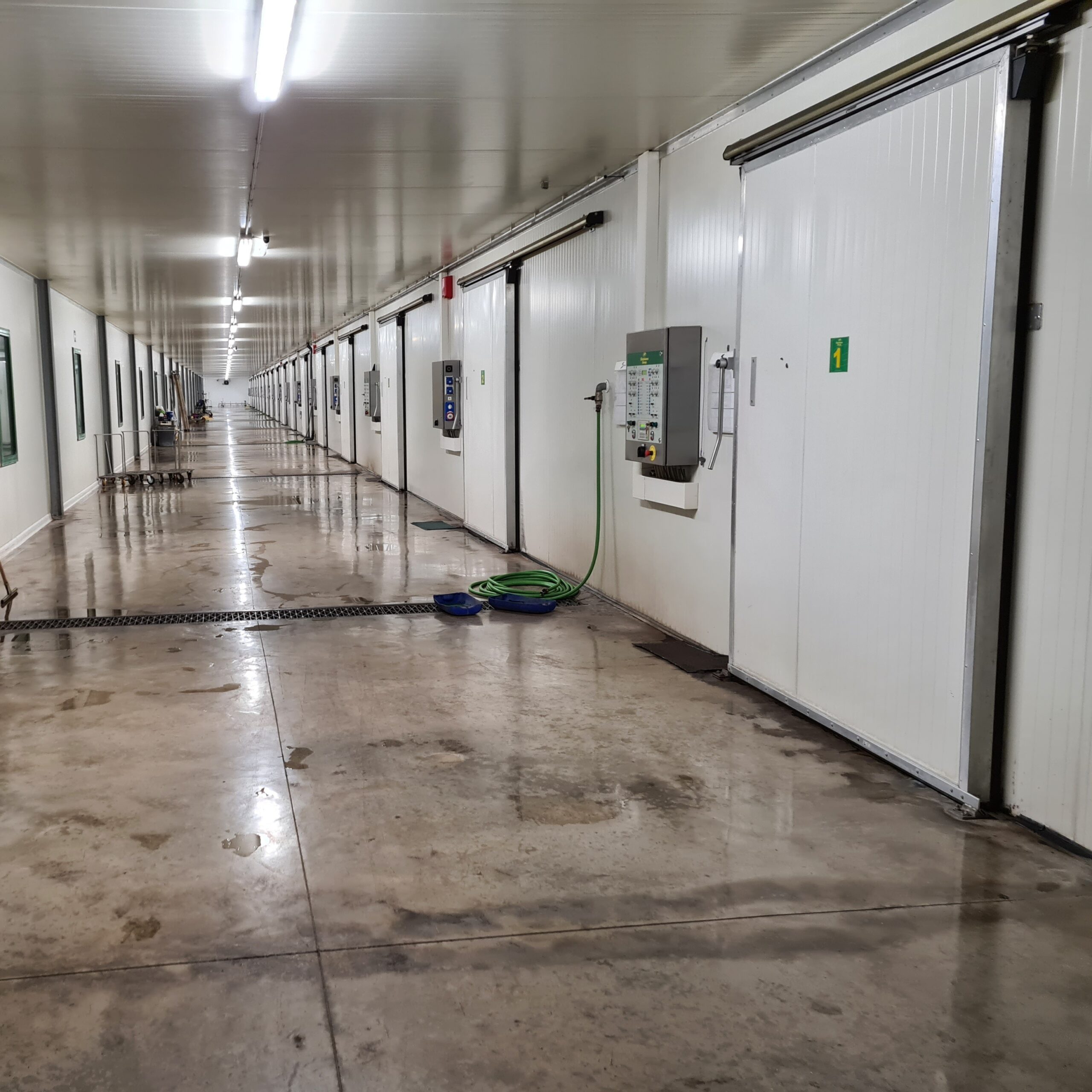
Hygiene is one of the most important pillars for producing disease-free mushrooms. That sounds logical, and it is, but in practice it often proves more difficult than expected. I regularly visit farms where a lot of time and cleaning products are used to keep everything clean. However, cleaning is not just a matter of scrubbing; it starts with thinking about how you clean. With a smart approach, you can clean floors, machines and other surfaces much faster and more effectively. Often these are obvious things, but they are also the ones we forget most easily.
Good cleaning starts with a smart layout. The fewer obstacles you encounter, the more efficiently you can work. Machines, stairs or materials that you have to spray around and where dirt can accumulate make the work unnecessarily difficult. Therefore, make sure that the space is as empty as possible. Anything you don’t use is a potential dirt trap. I regularly see work working corridors, the space in front of rooms, machines, ladders or materials that haven’t been used for months. They are in the way, collect dirt and slow down the cleaning process. So make sure you have a clear storage place. And if something really needs to stay in the working corridor, hang it up. This keeps the floor clear and allows you to spray clean quickly and effectively.
When cleaning, the way you work is just as important as the work itself. Always start at the highest point of the working corridor and work with the natural slope of the floor. This way, the dirt will wash away with the water.
Never spray in the direction of growing-room-doors, as this will spread dirt and possible pathogens, such as dry bubble (Verticillium fungicola; new name: Lecanicillium fungicola) or cobweb disease (Cladobotryum dendroides). The bottom of the growing-room-doors are never completely sealed, allowing spores to easily spread to the growing-rooms. The best approach? Keep the hose along the door and let the dirt wash away automatically. Only then should you spray the rest of the floor clean. Work in a structured manner: if you work logically and thoughtfully, you only need to clean each section of the floor once. However, I regularly see parts of the floor being rinsed two or even three times, which is a waste of time and water.
Once the coarse dirt has been removed from the floor with water, you can start using cleaning agent. If you do this earlier, the cleaning agent will lose much of its effectiveness. The cleaning agent will then mainly react to the dirt, instead of working effectively on the floor surface. A foaming cleaning product works best: it stays on the floor longer, giving it more time to do its job. I also regularly see people using too little dosing cleaning product. The result? A lot of water is used and the cleaning product disappears straight down the drain.
Important to know: cleaning agent is not a disinfectant. However, traces of mould adhere to organic material, and it is precisely this that is best removed from the floor with a good cleaning agent. Less organic material therefore means fewer traces left behind. After soaping, you can rinse the floor briefly to ensure that all residues are removed.
Cleaning seems so easy. You don’t usually think about cleaning a floor. But as you can see, I’ve been able to devote an entire blog to it. That’s because it’s a task that comes up every day. If someone can spend just 10 minutes less on it each day, that adds up to at least 1 hour per week and even a whole working week per year. And don’t forget how much water you save. In other words: spend time on good work instructions and a thorough training period, even for something as seemingly simple as cleaning floors.
Mark den Ouden | Mushroom Blog